
Is Emotional Distance in PSU Families a Result of Job Structure or Personal Neglect?
Is Emotional Distance in PSU Families a Result of Job Structure or Personal Neglect?
Apr 08, 2026
PSU careers provide stability and clarity, but structured responsibility may gradually influence emotional communication patterns inside families.
Understanding these silent shifts often reduces confusion without creating pressure.
1. Stability is Visible, Emotional Shifts are Subtle.
PSU life is usually associated with stability.
Predictable salary.
Defined hierarchy.
Gradual promotion cycle.
Long-term financial visibility.
These factors create confidence for both employees and their families.
Because of this stability,
PSU careers are often considered ideal for balanced family life.
However, stability in career does not automatically mean stability in emotional communication.
Sometimes, communication patterns change slowly without immediate notice.
Not suddenly.
Gradually.
Silently.
2. Transfer-Based Careers Shape Family Behaviour.
Transfers are a normal part of PSU careers.
Cities change.
Schools change.
Social environments change.
Family routines change.
Over time, families learn to adjust repeatedly.
Adjustment becomes part of lifestyle.
Spouses become more independent in managing daily decisions.
Children become familiar with adapting to new surroundings.
Employees become mentally prepared for periodic change.
Repeated adjustment creates behavioural discipline.
Discipline improves decision clarity.
But discipline may also influence emotional communication style.
3. Responsibility Gradually Becomes the Primary Language.
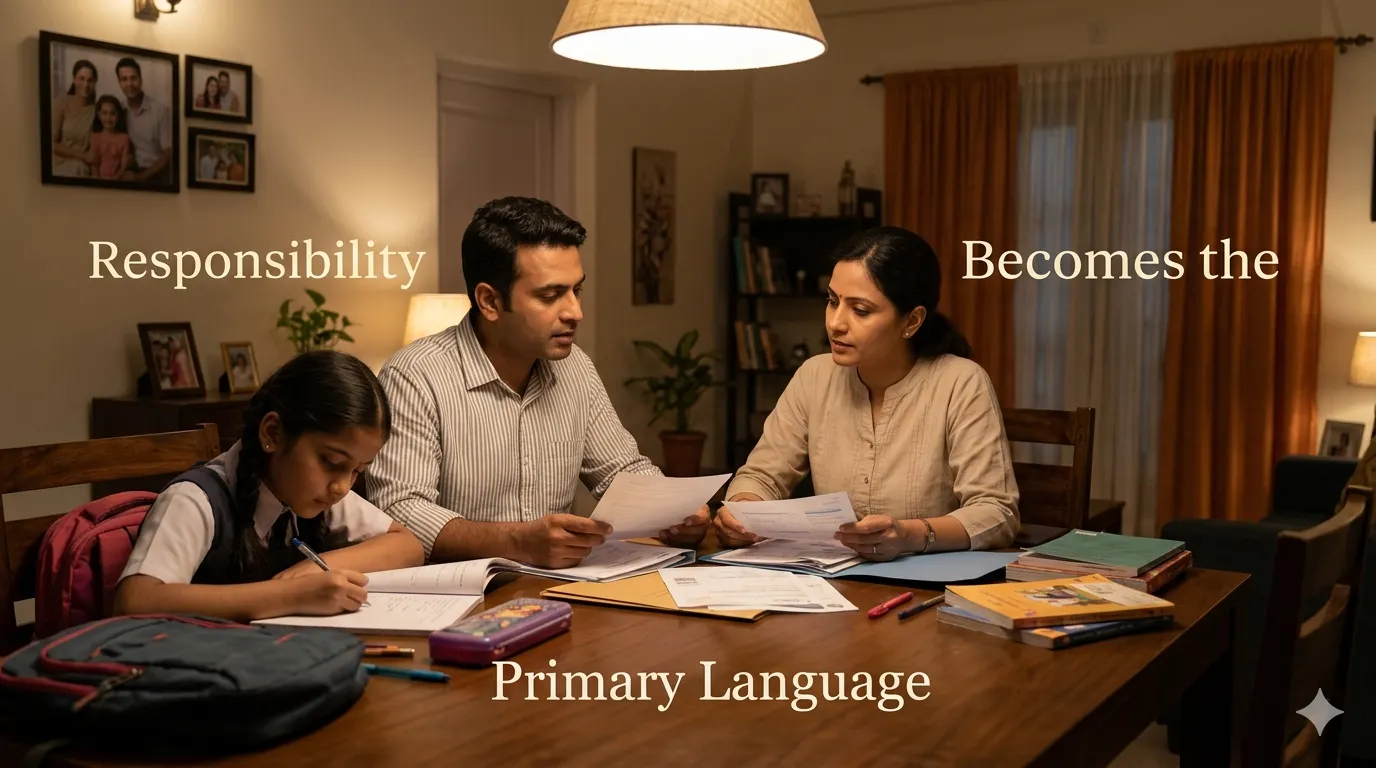
In early career stages, conversations often include exploration.
Future possibilities are discussed.
Ideas are shared.
Uncertainty exists.
Curiosity also exists.
As career progresses, responsibilities increase.
Financial planning becomes important.
Children’s education becomes important.
Housing decisions become important.
Health planning becomes important.
Gradually, family discussions become more practical.
School fees.
Transfer preferences.
Investment planning.
Loan commitments.
Retirement visibility.
These conversations are responsible.
They create long-term security.
But practical communication sometimes replaces emotional communication frequency.
Not intentionally.
Naturally.
4. Structured Work Environment Influences Communication Style.
PSU work culture encourages measured communication.
Hierarchy requires clarity and discipline.
Promotion cycles require patience.
Decision processes require careful evaluation.
Over time, these professional patterns influence personal behaviour.
Communication becomes concise.
Discussion becomes purpose-oriented.
Interaction becomes efficient.
Efficiency is valuable in professional environments.
But emotional connection often develops through unstructured interaction.
Unplanned conversation.
Undirected sharing.
Presence without specific purpose.
Structured environments rarely prioritise unstructured communication.
5. Emotional Expression is Different from Responsibility.
Many PSU employees express care through responsibility.
Providing financial stability.
Maintaining continuity.
Avoiding unnecessary risks.
Supporting family security.
Ensuring predictable future conditions.
Responsibility becomes visible proof of commitment.
But emotional expression operates differently.
It does not always follow logical structure.
It does not always follow measurable outcomes.
Emotional connection often develops through presence rather than planning.
Through listening rather than decision-making.
Through sharing rather than solving.
When mental energy is heavily used in responsibility management, emotional expression may reduce unconsciously.
6. Emotional Distance May Not Always Indicate Neglect.
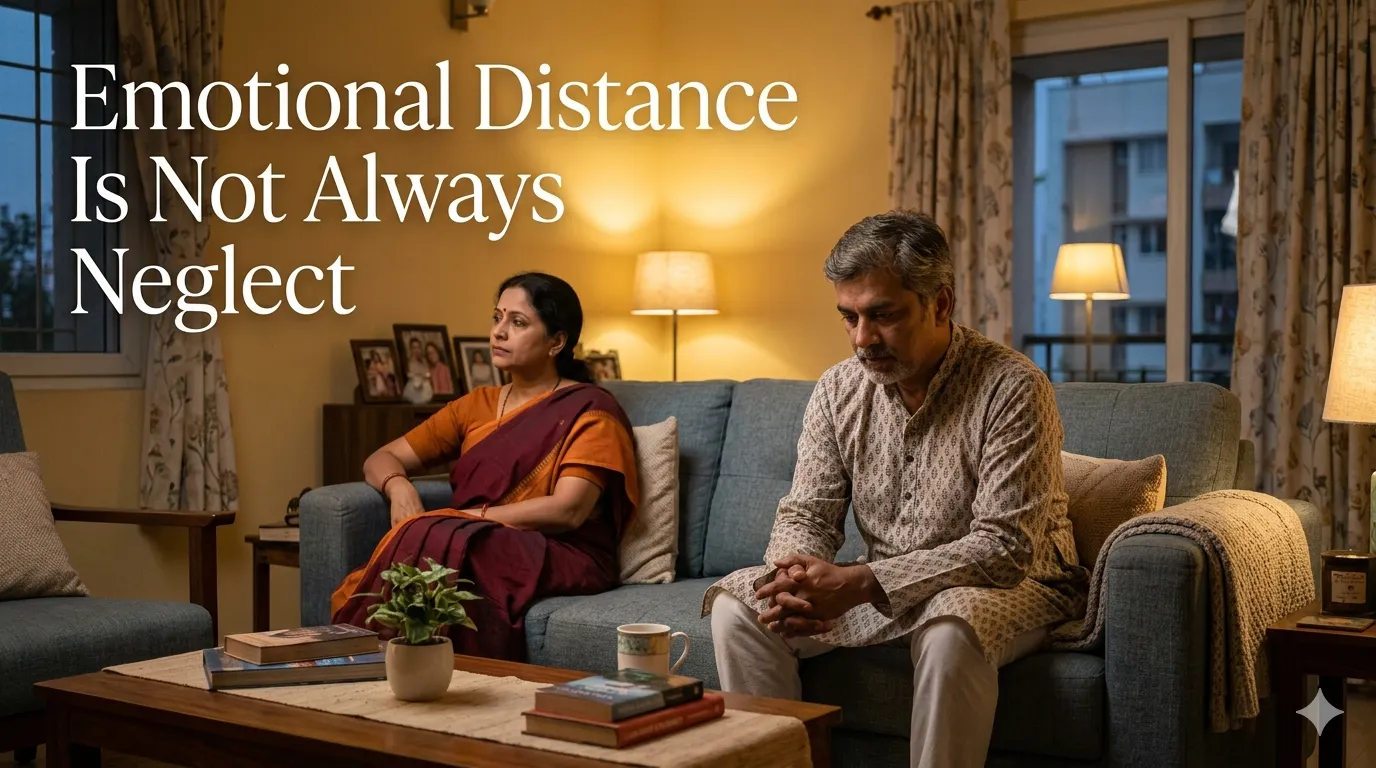
In many PSU families, emotional distance is not caused by lack of care.
It may develop due to long-term adaptation to structured living.
Structured careers encourage predictable behaviour.
Predictable behaviour improves stability.
But predictability may reduce spontaneity.
Spontaneity often supports emotional depth.
When spontaneity reduces, emotional expression may appear limited.
This does not necessarily indicate relationship weakness.
It may indicate behavioural conditioning developed over many years.
7. Awareness Reduces Unnecessary Self-Blame.
Many employees assume that emotional distance means personal failure.
However, understanding structural influence often reduces unnecessary guilt.
Behaviour patterns are often shaped by environment.
Long-term structured environments create long-term structured thinking.
Understanding patterns helps interpret experiences more calmly.
Awareness does not create pressure.
Awareness creates clarity.
Clarity reduces confusion.
Reduced confusion creates emotional space.
And emotional space often improves communication naturally.
8. PSU Careers Provide Stability — Awareness Creates Balance.
PSU careers provide dignity.
They provide continuity.
They provide financial visibility.
Understanding their psychological influence helps individuals maintain balanced expectations from relationships.
Balance rarely appears suddenly.
Balance develops gradually.
Similar to PSU career growth.
Slow.
Stable.
Consistent.
Often unnoticed while developing.
Nothing is wrong with you.
You are just becoming more aware.
BLOG OUTRO.
Structured careers create stability, but they also gradually shape communication patterns and expectations.
Emotional distance in PSU families is not always the result of neglect; sometimes it reflects long-term adaptation to responsibility-driven living.
Awareness helps us understand these patterns calmly, without blame or pressure.
Nothing is wrong with you.
You are just becoming more aware.