
Why Mental Freedom Feels Scarce Even in Secure PSU Careers
Why Mental Freedom Feels Scarce Even in Secure PSU Careers
Jan 29, 2026

PSU careers are often described as stable, secure, and respectable.\
For many employees, these words are true — on paper.
The income is predictable.
The job is structured.
The future feels planned.
And yet, many PSU employees quietly experience something else.
A lack of mental freedom.
Not anxiety in the dramatic sense.
Not dissatisfaction that demands escape.
But a subtle, constant mental occupation that never fully switches off.
This experience is rarely discussed, because it feels inappropriate to name it.
Stability on the Outside, Crowding on the Inside.
In PSU life, instability is not the main source of pressure.
Continuity is.
The same expectations repeating year after year.
The same roles being carried forward without pause.
The same comparisons resurfacing at every stage.
Early in a PSU career, responsibilities feel purposeful.
There is direction.
There is ambition.
Over time, responsibility becomes identity.
One is no longer just an individual —
but an officer, a provider, a senior, a role model, a reference point.
These roles are not forced.
They are accepted — responsibly.
But acceptance has a quiet cost.
When the Mind Stops Wandering.
Mental freedom does not disappear suddenly.
It reduces gradually.
At some point, the mind stops wandering naturally.
It starts performing.
Thoughts become scheduled.
Decisions feel pre-decided.
Inner conversations revolve around obligation, not curiosity.
Many PSU employees do not feel trapped.
They feel occupied.
Occupied by duties that are necessary.
Occupied by expectations that feel legitimate.
Occupied by comparisons that feel unavoidable.
The mind is always “on duty,” even when the body is resting.
The Silent Role of Comparison.
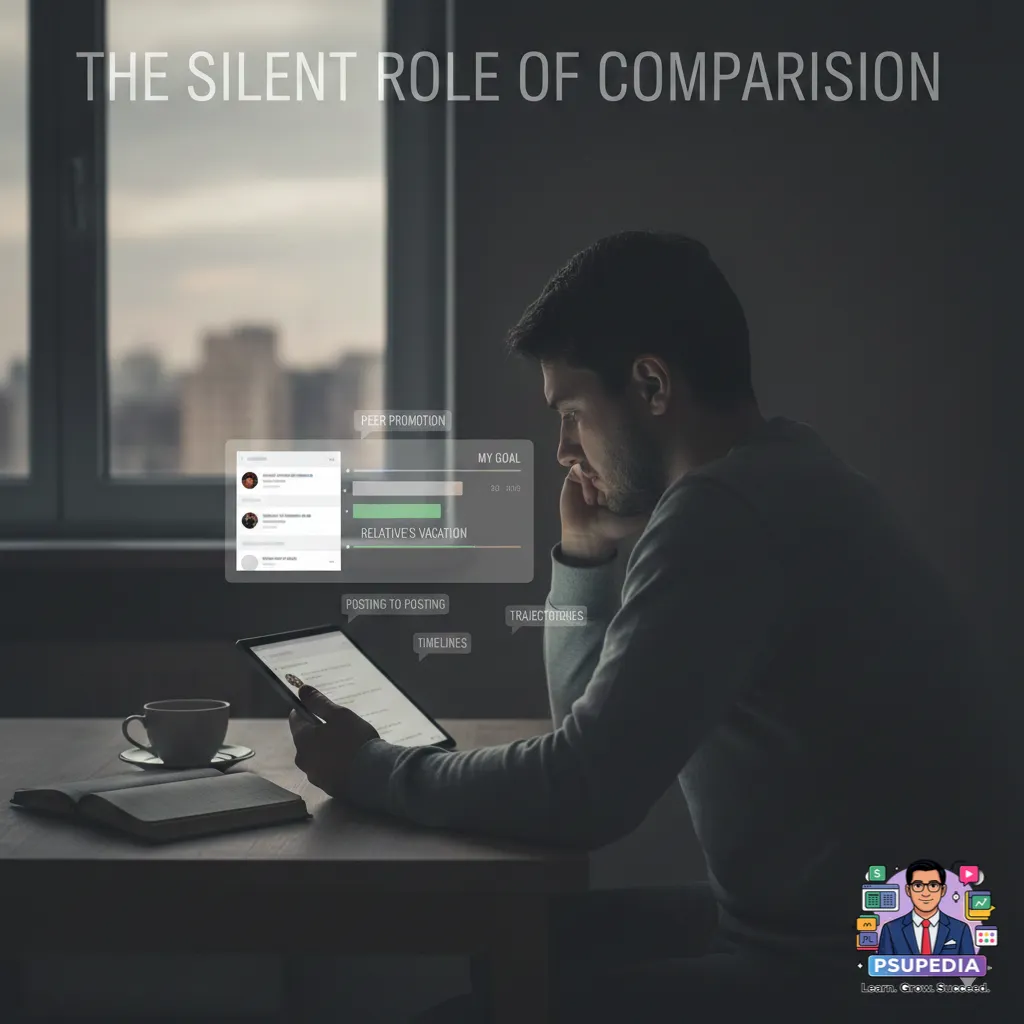
Comparison plays a central role in reducing mental space.
Not loud comparison.
Not jealousy.
Quiet comparison.
Posting to posting.
Promotion timelines.
Peer trajectories.
Relatives’ comments.
Social benchmarks that no one openly discusses.
PSU systems unintentionally create invisible reference points.
They standardize progress.
Over time, these reference points start shaping self-worth.
Where am I compared to others?\
Have I done enough?
Am I falling behind without realizing it?
These questions do not demand answers.
They simply occupy space.
Obligation That Never Appears on Paper.
Much of PSU pressure is not written in any job description.
It exists internally.
The obligation to be stable.
The obligation to justify security.
The obligation to “not complain.”
The obligation to meet expectations silently.
Because the job is secure, discomfort feels unjustified.
Because the income is stable, mental heaviness feels inappropriate.
So it remains unnamed.
And unnamed pressure tends to grow.
Why This Is Not Dissatisfaction.
Many employees interpret this experience as dissatisfaction.
It isn’t.
Dissatisfaction usually demands change.
This experience does not.
It feels heavier, slower, quieter.
It is the feeling of carrying responsibility for too long without observing it.
The problem is not lack of achievement.
The problem is lack of internal space.
Mental freedom is not the absence of duty.
It is the presence of breathing room within duty.
Stability and the Illusion of Inner Freedom.
PSU careers are designed to provide external freedom —
financial predictability, job continuity, social respect.
But internal freedom operates differently.
It requires space for reflection.
Space for unstructured thought.
Space that is not immediately filled by comparison or obligation.
When every mental gap is occupied, even leisure feels functional.
Rest becomes recovery, not presence.
The mind is never fully at ease.
It is always preparing, measuring, maintaining.
Awareness Changes the Relationship, Not the Reality.
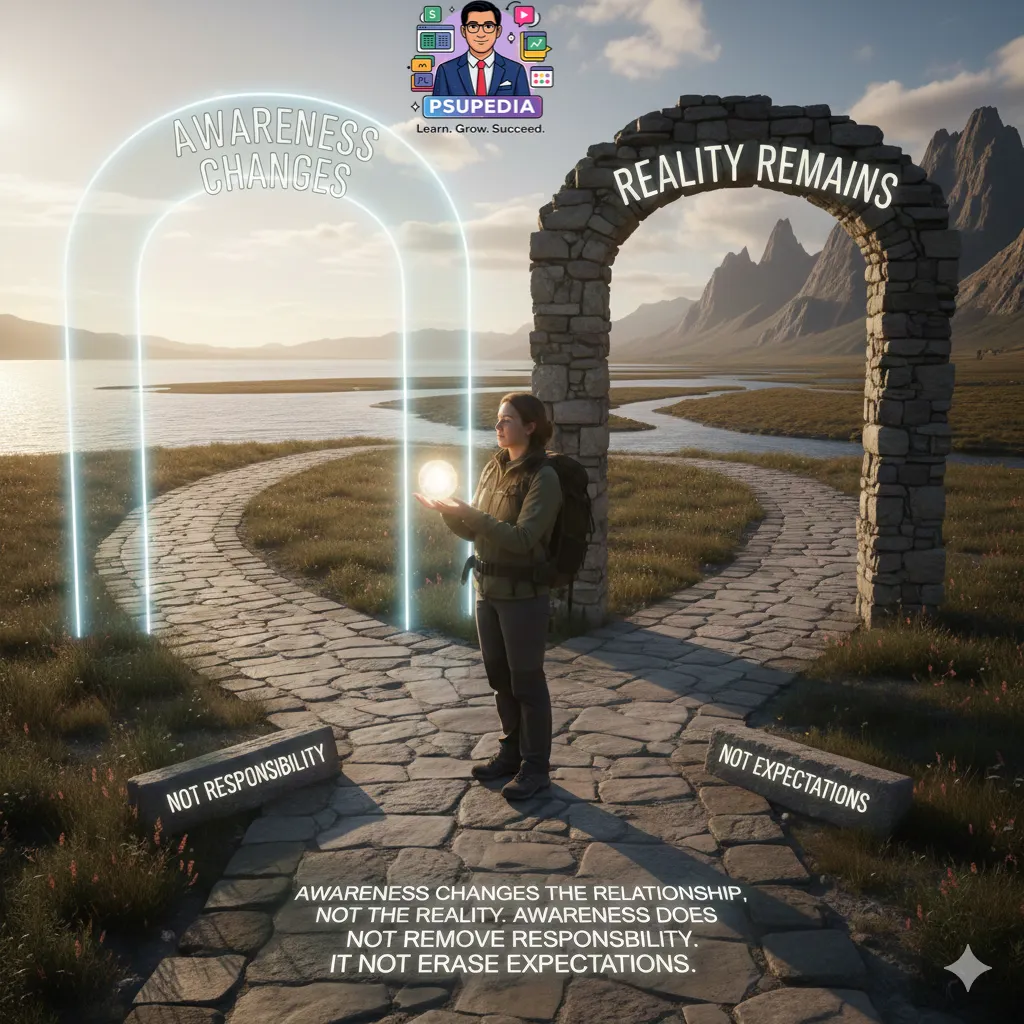
Awareness does not remove responsibility.
It does not erase expectations.
It does not challenge the system.
It simply changes the relationship with them.
When this mental pattern is seen clearly, something subtle shifts.
The weight remains —
but it loosens.
The comparison still appears —
but it no longer defines.
Nothing dramatic changes externally.
But internally, space begins to return.
This space is not rebellion.
It is recognition.
Why Contribution and Legacy Need Mental Space.
Contribution does not come from a crowded mind.
Legacy does not emerge from constant internal noise.
They require stillness.
They require clarity.
They require freedom — not from work, but from constant inner occupation.
Before contribution becomes external, it must become internal.
Before legacy becomes visible, it must have space to form.
A Quiet Truth for PSU Employees.
If this reflection feels familiar, it does not mean something is wrong.
It means awareness is increasing.
Many PSU employees reach this stage not because they are failing —
but because they have carried responsibility well for a long time.
Mental freedom often feels scarce not due to lack of stability,
but due to excess obligation without reflection.
And recognizing this is not a weakness.
It is a turning point.
Continue Learning with PSUPEDIA.
Mental freedom often feels scarce not because something is wrong,
but because responsibility has been carried for a long time without pause.
If this reflection felt familiar, it simply means awareness is growing.
— Ramjee Meena
Founder, PSUPEDIA